If you are comparing Medicube vs The Ordinary Volufiline, the first thing to ignore is the most obvious difference on the label.
The Ordinary says 92% Volufiline.
Medicube says 5% Volufiline.
That does not automatically mean The Ordinary is 18.4 times stronger, 18.4 times more effective, or 18.4 times better at restoring facial volume.
Volufiline is not pure sarsasapogenin. It is a branded cosmetic ingredient system.
And once you look past the percentage headline, these are two very different products.
The Ordinary Volufiline 92% + Pal-Isoleucine 1% is a short, water-free targeted serum built primarily around Volufiline.
Medicube PDRN Pink Collagen Volume Multi Balm is a richer stick balm combining 5% Volufiline with Sodium DNA/PDRN, collagen, NAD, NMN, retinol, caffeine, hyaluronic acid, elastin, and multiple peptides.
They also sit in almost the same U.S. price range.
As checked on August 28, 2026, The Ordinary was $21.40 for 15mL. Medicube was $21.90 at Ulta and $22 on the Medicube U.S. site.
So the real buying question is not:
92% or 5%?
It is:
Do you want a Volufiline-focused targeted serum or a richer multi-active balm?
The short answer:
The Ordinary is the Volufiline-focused pick. Medicube is the multi-active balm pick. Neither is topical filler.
Prices and availability can change, so recheck the current retailer listing before purchasing.
Disclosure: This article contains affiliate links. If you buy through them, K-Beauty Clarity may earn a commission. As an Amazon Associate I earn from qualifying purchases.
Medicube vs The Ordinary Volufiline: Quick Verdict
Choose The Ordinary if you want:
- a simpler, Volufiline-focused targeted serum
- the higher disclosed Volufiline ingredient-system percentage
- a short seven-ingredient water-free formula
- a product without retinol in the current ingredient list
- targeted use after moisturizer on selected areas
- a cleaner way to test whether a Volufiline-focused formula fits your routine
Choose Medicube if you want:
- a portable balm stick
- a richer and more emollient finish
- immediate-looking hydration and surface smoothing
- Volufiline combined with PDRN/Sodium DNA, retinol, peptides, NAD/NMN, collagen, and caffeine
- a product you can target around dry-looking areas, lips, smile lines, neck, and under-eye contours
- a balm you would still use even if the Volufiline contribution is subtle
Choose neither if you expect:
- injectable-filler replacement
- guaranteed facial-fat restoration
- reliable elimination of structural tear-trough hollows
- predictable results based only on “92%” or “5%” on the label
Compare current Amazon prices:
The Ordinary Volufiline 92% + Pal-Isoleucine 1% →
Medicube PDRN Pink Collagen Volume Multi Balm →
Medicube vs The Ordinary Volufiline at a Glance
| Feature | The Ordinary Volufiline 92% + Pal-Isoleucine 1% | Medicube PDRN Pink Collagen Volume Multi Balm |
|---|---|---|
| Format | Targeted anhydrous serum | Targeted balm stick |
| Size | 15mL | 0.35 oz / about 10g |
| U.S. price checked | $21.40 | About $21.90–$22 |
| Volufiline disclosure | 92% | 5% |
| Pure sarsasapogenin percentage? | No | No |
| Other headline ingredients | 1% Palmitoyl Isoleucine | PDRN/Sodium DNA, NAD/NMN, retinol, peptides, collagen, caffeine |
| Formula style | Minimalist | Multi-active |
| Best fit | Volufiline-focused targeted use | Hydration, balm texture, portability |
| Contains retinol? | Not listed in current formula | Yes |
| Filler replacement? | No | No |
The Biggest Mistake: Treating 92% and 5% as Pure Active Strength
The Ordinary lists 92% Volufiline.
Medicube lists 5% Volufiline.
That tells us that The Ordinary uses a higher disclosed proportion of the Volufiline trade ingredient system in its finished formula.
It does not tell us that The Ordinary contains 92% pure sarsasapogenin.
It also does not mean that The Ordinary will create 18.4 times more visible facial volume than Medicube.
Croda identifies Volufiline as a cosmetic ingredient with the INCI:
Hydrogenated Polyisobutene and Anemarrhenae Asphodeloides Root Extract.
So both percentages refer to how much of the Volufiline ingredient system is used—not a directly comparable percentage of one pure active molecule.
The useful conclusion is simple:
The Ordinary has the higher disclosed Volufiline-system percentage.
But a higher number does not automatically determine facial delivery, skin tolerance, immediate appearance, long-term visible results, or which finished formula is better for your skin.
If percentage labels are the main reason you are confused, our best Volufiline Korean skincare products guide explains why 5%, 50,000ppm, and “100% Volufiline” need to be interpreted before they are compared.
What Is The Ordinary Volufiline 92% Actually Formulated Like?
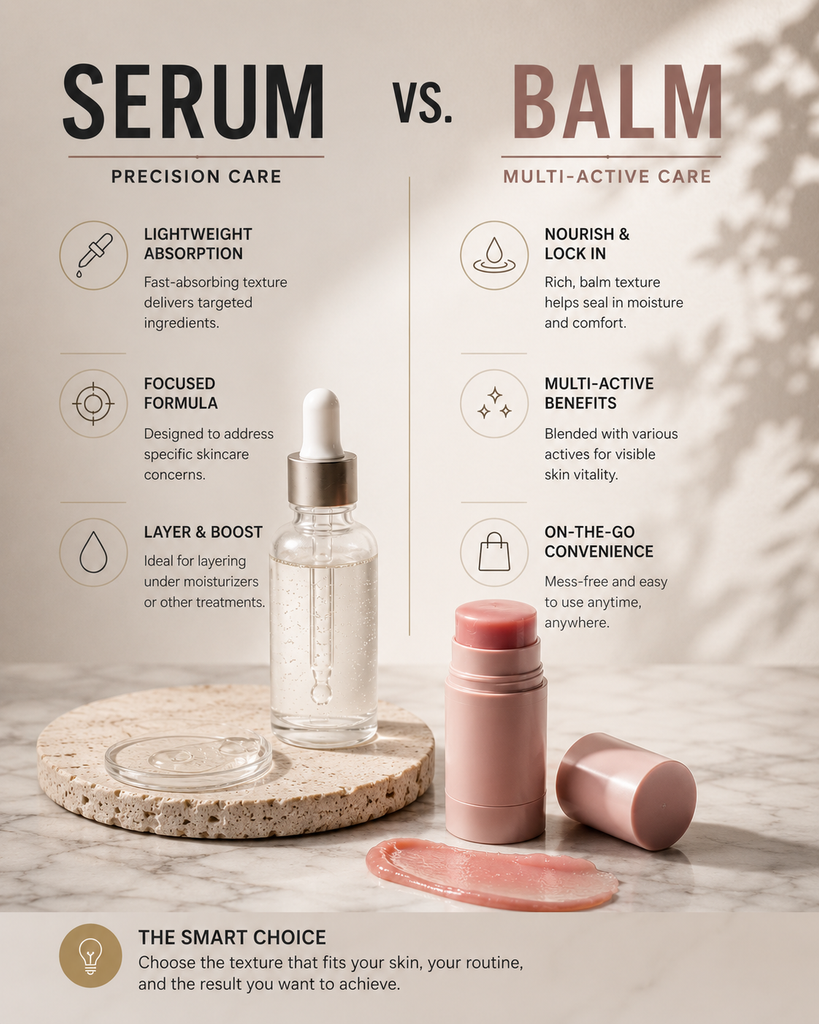
The Ordinary takes the simpler approach.
Its current U.S. ingredient list contains seven ingredients:
- Hydrogenated Polyisobutene
- Caprylyl Glycol
- Polyglyceryl-3 Stearate
- Palmitoyl Isoleucine
- Anemarrhena Asphodeloides Root Extract
- Rhus Succedanea Fruit Wax
- Tocopherol
The brand describes it as an anhydrous targeted serum for visible volume loss.
Its headline formula is:
92% Volufiline + 1% Palmitoyl Isoleucine.
The Ordinary describes Palmitoyl Isoleucine as a supporting lipoamino acid intended to support a plumper appearance, elasticity, and the look of fine lines.
That is brand-provided ingredient positioning. It should not be confused with independent proof that this specific formula regenerates facial fat.
Still, the overall formula strategy is unusually clear.
If you buy this product, you are primarily buying a Volufiline-focused targeted treatment.
There is no PDRN story.
No NAD/NMN headline.
No retinol.
No long peptide blend.
For shoppers who specifically want to test a Volufiline-focused finished product, that simplicity is a real advantage.
If The Ordinary is the formula you are leaning toward, read our The Ordinary Volufiline Review for a closer look at what the 92% claim actually means, the seven-ingredient formula, under-eye use, texture, evidence limits, and whether the $21.40 serum is worth trying.
How Do You Use The Ordinary Volufiline?
The Ordinary instructs users to shake the product and apply it directly to clean, dry target areas after moisturizer.
The brand positions it for areas that appear affected by visible volume loss, including:
- under-eye hollows
- temples
- cheeks
- smile lines
This matters because it is not intended to behave like a conventional all-over hydrating serum.
Think of it as a targeted finishing treatment.
Application amount also matters.
A highly concentrated-looking percentage does not mean more product should be poured across the face.
Current retailer feedback is mixed: some buyers report visible changes around areas such as lips or facial lines, while others report little noticeable difference, pilling, an oily feel, or difficulty controlling the amount dispensed.
That variability is important.
A 92% headline does not guarantee that every user will see obvious visible volume changes.
What Is the Medicube Balm Actually Formulated Like?
Medicube takes almost the opposite approach.
The PDRN Pink Collagen Volume Multi Balm is built on a wax-and-emollient balm base.
Its full ingredient list includes components such as:
- Hydrogenated Polyisobutene
- multiple waxes and emollients
- Anemarrhena asphodeloides root extract
- Sodium DNA
- adenosine
- caffeine
- collagen
- sodium hyaluronate
- retinol
- NMN
- NAD
- hydrolyzed elastin
- multiple peptides
Ulta specifically discloses 5% Volufiline.
Medicube is therefore not best understood as a minimalist Volufiline concentrate.
It is a multi-active targeted balm.
That distinction matters more than the percentage headline.
A waxy, emollient balm can immediately make dry or crepey-looking skin look smoother through hydration, occlusion, surface softening, and added sheen.
So if someone applies Medicube and sees an immediate cosmetic improvement, that change cannot automatically be attributed to Volufiline alone.
The balm base itself is doing visible work.
For a full breakdown of the finished formula, brand testing, under-eye use, texture, and buying value, read our Medicube PDRN Pink Collagen Volume Multi Balm review.
Does Medicube Really Have More “Actives”?
Medicube has more headline ingredients.
That is not necessarily the same as having more effective active treatment.
PDRN/Sodium DNA, NAD, NMN, retinol, peptides, collagen, and caffeine may all be present in the formula, but the public product information does not disclose directly comparable concentrations for most of them.
Their presence on the INCI list does not establish that the balm delivers the same strength, evidence base, or expected result as a dedicated standalone retinol, PDRN, NAD, or peptide treatment.
In other words, do not mentally translate the label into:
5% Volufiline + full-strength PDRN treatment + full-strength retinol + full-strength NAD serum + full-strength peptide serum.
We know those ingredients are present.
We do not know that each is present at a concentration comparable with a dedicated treatment.
Medicube is better understood as one complex finished balm.
If PDRN is a major reason you are considering it, our guide to what PDRN skincare actually is explains why Sodium DNA on an ingredient list should not automatically be equated with injectable or clinic-based PDRN.
Which Formula Is Better for Under-Eye Hollows?
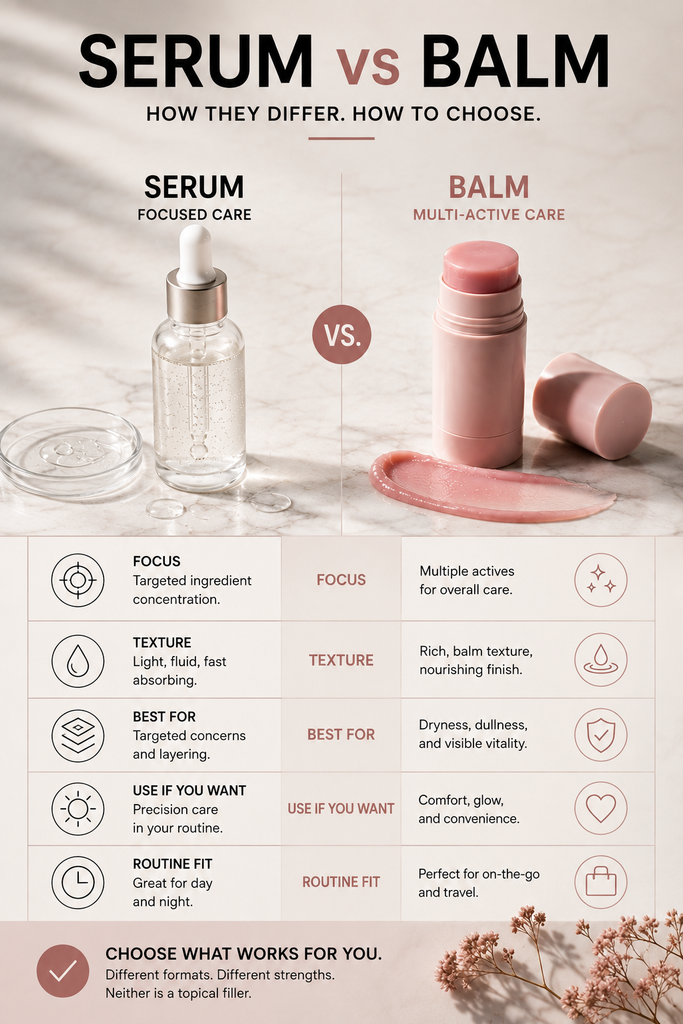
For true structural tear-trough hollowness, neither product should be treated as a predictable alternative to injectable filler.
Under-eye darkness, shadowing, and hollow-looking contours can be affected by anatomy, pigmentation, puffiness, allergies, dehydration, and the way light reflects from the skin.
Medicube may create a more immediate cosmetic improvement if the eye area looks dry, crepey, or dull because a balm can add emollience, surface smoothing, and light-reflecting sheen.
The Ordinary is the more focused choice if you specifically want to test a high-proportion Volufiline ingredient-system formula on a small target area.
So:
For immediate moisture and surface smoothing: Medicube.
For a simpler Volufiline-focused experiment: The Ordinary.
For reliably restoring deep structural volume: neither.
That last distinction is the most important.
A topical formula may improve how an under-eye contour looks.
That is not the same as reliably rebuilding the anatomy beneath it.
Which Is Better for Smile Lines?
This depends on what bothers you about the line.
If the area mainly looks dry, creased, or dehydrated, Medicube’s balm texture can provide an immediate cosmetic smoothing effect.
If you specifically want to target the appearance of volume loss around the mouth using a concentrated Volufiline-focused formula, The Ordinary is more directly designed around that goal.
Public feedback for both products is mixed.
Some users report visible improvement.
Others mainly notice hydration, texture changes, or no meaningful difference.
That tells us something useful:
Neither percentage eliminates individual variability.
Which Is Better for Lips?
If your goal is primarily dry lips and visible lip-line smoothing, Medicube has the more intuitive format.
It is already a balm.
If your goal is to experiment specifically with Volufiline around the lip contour, The Ordinary is the more focused formula.
Retailer feedback for The Ordinary includes positive lip-plumping reports, but some users also describe tingling or unusual sensation around the lips.
That does not establish a universal problem, but it is another reason to use the formula only as directed and stop if irritation develops.
Do not apply either product into the mouth or eye itself.
Which Has the Better Texture?
This question may matter more in daily life than the ingredient percentage.
Choose The Ordinary if you prefer:
- targeted drop application
- a water-free serum
- very small amounts on specific areas
- applying the Volufiline step after moisturizer
- a short ingredient list
Choose Medicube if you prefer:
- a solid balm stick
- direct targeted application
- a richer finish
- more obvious immediate moisturization
- a portable touch-up format
Neither texture is universally better.
If you dislike glossy, waxy skincare, Medicube may feel too rich.
If you dislike targeted oily-serum textures or drop dispensing, The Ordinary may be more annoying to use.
The product you consistently apply correctly is more useful than the one with the most dramatic number on the front.
Which Is Better for Sensitive Skin?
The Ordinary has the simpler ingredient list.
Its current formula contains seven ingredients, and the brand recommends patch testing.
Medicube has a substantially longer multi-active formula.
It also contains retinol and aromatic botanical oils including:
- geranium oil
- ylang-ylang oil
- bergamot oil
- rose oil
Medicube says its finished balm has been low-irritation tested and is suitable for delicate areas such as under the eyes.
That is relevant brand-provided finished-product information.
It does not guarantee that every reactive user will tolerate every ingredient.
DermNet lists fragrances and essential oils among potential triggers for eyelid contact dermatitis in susceptible people.
If your eye area is highly reactive, a simpler ingredient list can make it easier to identify what your skin tolerates.
Patch testing is sensible for both products.
What If You Already Use Retinoids?
This is a meaningful difference.
Medicube already contains retinol.
The percentage is not disclosed.
If you already use retinoids, exfoliating acids, or other potentially irritating products around the same area, introduce Medicube gradually rather than assuming the balm is a completely passive moisturizer.
This is about managing the total irritation burden of the finished routine—not claiming that every combination is chemically incompatible.
The Ordinary’s current Volufiline formula does not list retinol or another retinoid.
That can make it easier to add to a routine where you already have a separate retinoid product you want to control independently.
For the larger evidence difference between PDRN and retinoids, see our PDRN vs retinol comparison.
What About Pregnancy?
Medicube contains retinol.
ACOG notes that absorption from topical retinoids is low but still generally recommends avoiding topical retinoid use during pregnancy.
So if you are pregnant or trying to conceive, Medicube is the less straightforward choice.
If you are breastfeeding or have been given individual instructions about retinoid use, ask your healthcare professional for product-specific guidance.
The Ordinary’s current Volufiline formula does not list retinol.
That does not turn this article into a universal pregnancy-safety recommendation for The Ordinary.
Always evaluate the current full formula and your individual situation.
Which Has Better Clinical Evidence?
This is more complicated than choosing the product with the bigger number.
Medicube publishes finished-product visible-result percentages for areas including under-eye hollowness, crow’s feet, lip lines, neck lines, frown lines, and forehead lines.
Those are brand-published finished-product test results.
They are not independent proof that 5% Volufiline caused every measured change.
Medicube’s balm contains a rich emollient system plus many other ingredients that can influence visible skin appearance.
The Ordinary’s current U.S. product page provides detailed ingredient positioning and usage information but does not present an equivalent public list of finished-product clinical percentages.
That does not automatically make Medicube better proven.
It means the public evidence packages are different.
Most importantly, there is no independent head-to-head clinical trial showing:
Medicube 5% vs The Ordinary 92% for facial volume.
So any claim that one has been clinically proven superior to the other would go beyond the evidence.
What Are Buyers Saying?
The Ordinary currently has a broader visible public review base across major U.S. retailers.
Medicube currently has a smaller and more polarized public review sample.
Ratings and review counts change frequently, so they are better treated as consumer-feedback signals than proof of efficacy.
The Ordinary’s feedback patterns include both:
- reports of subtle plumping or improvement around selected areas
- reports of no visible change
- comments about texture or pilling
- complaints about dispensing too much
- reports of unusual sensation around the lip area
Medicube’s feedback patterns include both:
- hydration and glow
- portable application
- smoother-looking dry areas
- some reports of improvement around under-eyes or smile lines
- greasiness
- pilling when overapplied
- disappointment from users expecting dramatic volumizing
The common lesson is more useful than either average rating:
Expectations and formula preference strongly influence satisfaction.
Which Is Better Value?
As checked in August 2026, both products sat in a similar U.S. price range:
The Ordinary: $21.40
Medicube: about $21.90–$22
The Ordinary is sold as a 15mL serum.
Medicube is sold as a 0.35 oz balm stick, approximately 10g.
Because one is a liquid serum and the other is a solid balm used differently, a simplistic price-per-milliliter or price-per-gram winner would be misleading.
Ask what function you are paying for.
With The Ordinary, most of the purchase logic is:
a concentrated Volufiline-focused formula.
With Medicube, you are paying for:
- balm format
- hydration
- glow
- portability
- multiple supporting ingredients
- targeted touch-up convenience
If Volufiline itself is the main reason you are shopping, The Ordinary gives you the clearer value proposition.
If you would buy a rich multi-use balm anyway, Medicube can offer more practical everyday utility.
The Ordinary 92% vs Medicube 5%: Which Is Stronger?
If by “stronger” you mean:
Which contains the higher disclosed proportion of the Volufiline ingredient system?
The answer is:
The Ordinary.
92% is higher than 5%.
If by “stronger” you mean:
Which will create 18.4 times more facial volume?
There is no evidence supporting that conclusion.
If you mean:
Which finished product may make dry, crepey-looking skin appear smoother immediately?
The balm format may matter more than the headline percentage.
And if you mean:
Which one has been proven to rebuild lost facial fat like filler?
Neither.
That distinction is the entire comparison.
Who Should Buy The Ordinary Volufiline 92%?
Choose The Ordinary if:
- your main interest is Volufiline itself
- you want the higher disclosed Volufiline-system percentage
- you prefer a minimalist formula
- you want targeted use after moisturizer
- you already own a moisturizer you like
- you want to keep retinol separate from this step
- you want to test one more focused formula rather than a multi-active balm
- you are comfortable keeping expectations realistic
Check the current Amazon price for The Ordinary Volufiline 92% + Pal-Isoleucine 1% →
Who Should Buy Medicube PDRN Multi Balm?
Choose Medicube if:
- dry or crepey texture is a major concern
- you like richer balm formulas
- you want immediate-looking moisture and glow
- portability matters
- you want one product for dry under-eye contours, lips, smile lines, neck, and touch-ups
- you specifically like the idea of a formula that includes Sodium DNA/PDRN, retinol, peptides, NAD/NMN, collagen, and caffeine
- you would still use the balm even if the Volufiline effect turns out to be modest
Check the current Amazon price for Medicube PDRN Pink Collagen Volume Multi Balm →
Who Should Skip Both?
Skip both if:
- you expect skincare to replace injectable filler
- you expect deep structural tear-trough hollows to disappear
- you are buying only because of viral before-and-after videos
- you think 92% means 92% pure sarsasapogenin
- you want guaranteed facial-fat growth
- you are choosing purely by the biggest number on the label
Where Should You Buy Them?
For The Ordinary, start with the official The Ordinary Volufiline product page.
When this guide was finalized, the product was $21.40 for 15mL and marked Trending.
You can also compare current availability at Ulta Beauty and Sephora.
For Medicube, check the Medicube U.S. official product page first.
The Medicube site showed a $22 price but sold-out status when checked. Ulta Beauty listed the balm at $21.90 with shipping availability when checked.
Medicube also publishes an authorized-seller and counterfeit guidance page.
Recheck price, stock, and seller status for your exact purchase date.
Final Verdict: Medicube vs The Ordinary Volufiline
The Ordinary Volufiline 92% + Pal-Isoleucine 1% is the more logical choice if your main interest is Volufiline itself.
It uses a much higher disclosed proportion of the Volufiline ingredient system, has a short water-free formula, includes 1% Palmitoyl Isoleucine, and sits in a similar price range to Medicube.
But this is not proof that it is 18.4 times more effective than Medicube.
And it is not proof of filler-like facial-volume restoration.
Medicube PDRN Pink Collagen Volume Multi Balm is the better choice if you want a richer balm that offers practical day-to-day benefits through hydration, surface smoothing, glow, and portable targeted application.
Its PDRN/Sodium DNA, retinol, peptides, NAD/NMN, collagen, and caffeine make it a more complex formula.
Their inclusion does not mean the balm replaces several dedicated high-strength treatments.
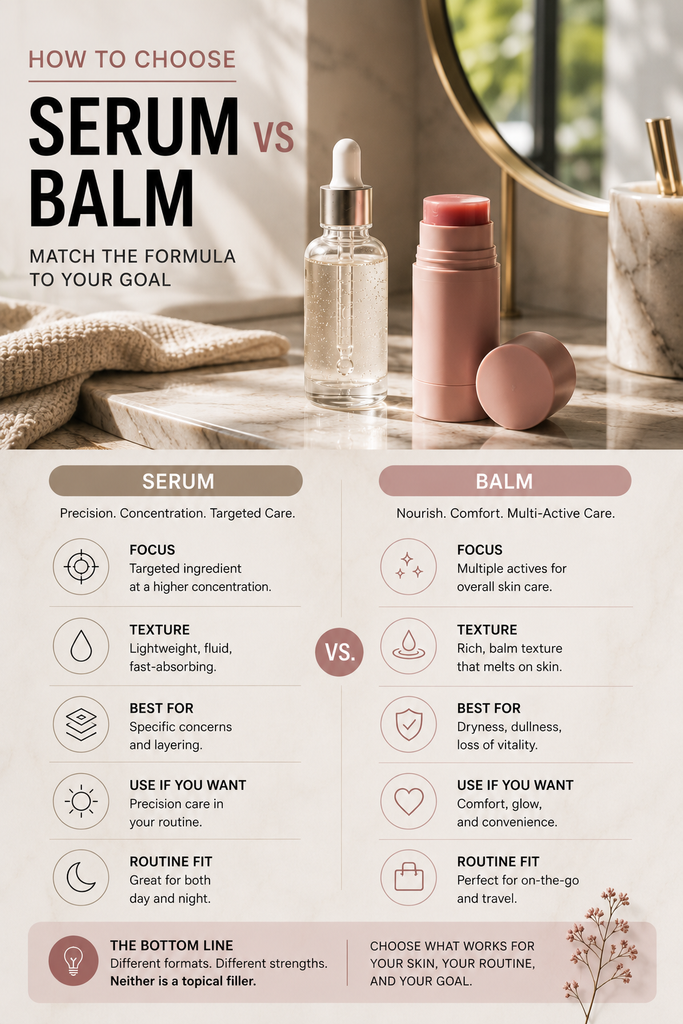
The decision is simple:
Volufiline-focused pick: The Ordinary.
Multi-active balm, hydration, and portability pick: Medicube.
Proven filler-like facial-volume pick: Neither.
Buy the finished formula that fits your goal—not the biggest percentage on the label.
Sources & Product Verification
The Ordinary — Volufiline 92% + Pal-Isoleucine 1%
Ulta Beauty — The Ordinary Volufiline 92% + Pal-Isoleucine 1%
Sephora — The Ordinary Volufiline 92% + Pal-Isoleucine 1%
Medicube U.S. — PDRN Pink Collagen Volume Multi Balm
Ulta Beauty — Medicube PDRN Pink Collagen Volume Multi Balm
Medicube U.S. — Authorized Sellers & Counterfeit Guidance
ACOG — Skin Conditions During Pregnancy